
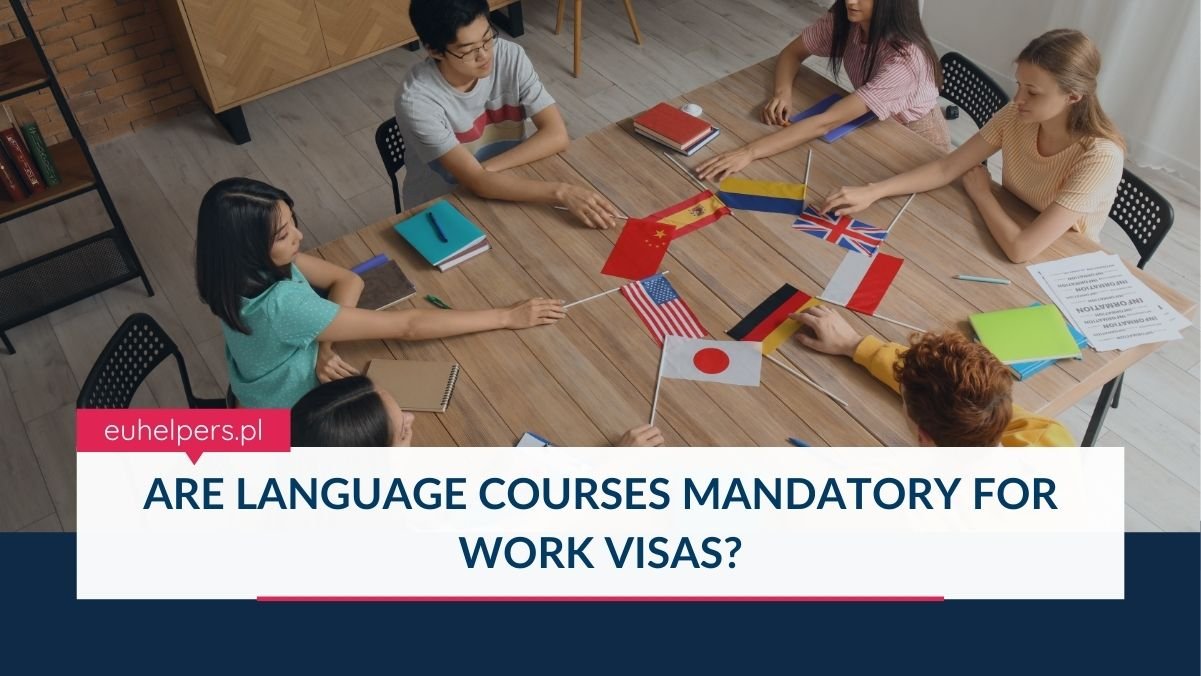
In most cases, language courses are not mandatory for work visas, especially for blue-collar, technical, and shortage-occupation jobs. However, some countries and visa categories may encourage or later require language learning, depending on the job type and long-term stay plans.
General Rule: Language Courses Are Usually NOT Mandatory
For most initial work visas, countries focus on:
-
Job offer from an approved employer
-
Skills or labor shortage
-
Legal work permit approval
Language training is not a pre-condition in many cases, especially for:
-
Construction workers
-
Factory and warehouse workers
-
Cleaners and helpers
-
Agricultural and seasonal workers
Employers often hire workers who speak basic English or no local language, especially in labor-shortage sectors.
Language Requirements in Europe
In the European Union, work visa language rules are set by each country, not centrally.
Most EU countries:
-
Do not require language certificates for short-term or employer-sponsored work visas
-
May recommend language learning after arrival
-
Require language only for permanent residence or citizenship, not for the first work permit
When Language Courses MAY Be Required
Language courses or proof may be required in these situations:
1. Skilled or Regulated Professions
Jobs such as:
-
Nurses and caregivers
-
Doctors
-
Teachers
-
Social workers
These roles often require local language proficiency for safety and communication.
2. Long-Term Residence or PR
Many countries require:
-
A1–B1 level language proof
-
Completion of an integration or language course
This usually applies after several years, not at the visa stage.
3. Family Reunification Visas
Some countries require:
-
Basic language knowledge for spouses
-
Enrollment in language courses after arrival
Countries Where Language Is Rarely Mandatory for Work Visas
For blue-collar and technical jobs, language courses are usually not mandatory in:
-
Eastern and Central Europe
-
Southern Europe
-
Balkan countries
-
Some Nordic seasonal programs
Basic English or site-level communication is often enough.
Do Employers Provide Language Support?
In many cases, yes.
Employers may offer:
-
On-site translators or supervisors
-
Free or discounted language classes
-
Time flexibility for language learning
Some governments also fund integration and language programs for foreign workers.
Is English Enough for a Work Visa?
Often, yes.
-
Many work permits accept basic English
-
Construction, logistics, and factory jobs rely on simple instructions
-
English is commonly used at multinational job sites
Local language becomes more important over time, not at entry.
What Happens If You Don’t Learn the Language?
Short term:
-
You can still work legally
-
No visa cancellation just for language
Long term:
-
Difficult to change jobs
-
Harder to extend permits in some countries
-
Mandatory language proof for permanent residence
Learning the local language improves job security and salary growth.
Key Takeaway
Language courses are usually NOT mandatory for work visas, especially for blue-collar and shortage jobs.
They may become important later for:
-
Permanent residence
-
Family visas
-
Skilled professions
For most foreign workers, a valid job offer and work permit matter far more than language certificates at the start.