
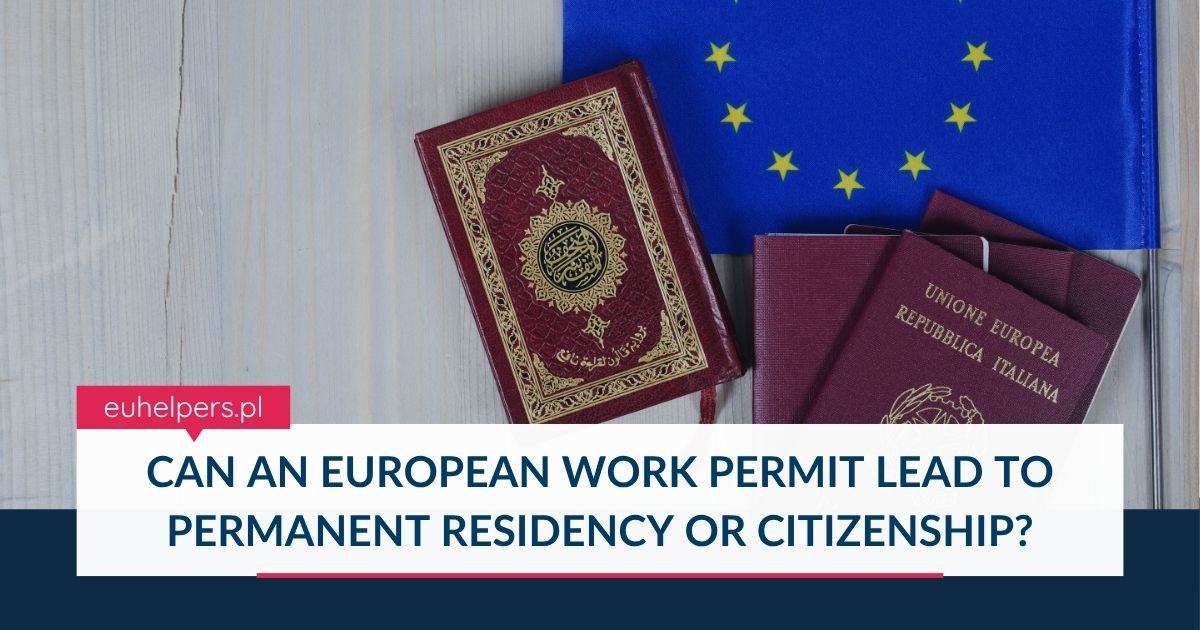
For many professionals and skilled workers, Europe remains a top destination to build a career and secure a better future. But a common question arises: Can a European work permit lead to permanent residency or even citizenship? The short answer is: Yes, in most cases, a work permit can be the first step toward permanent settlement in Europe. However, the pathway depends on the specific country, type of permit, and length of stay.
Understanding a European Work Permit
A European work permit is an official authorization that allows a non-EU citizen to live and work in a European country legally. It is usually granted for a fixed duration (1–5 years depending on the country and employment contract). Popular options include:
-
EU Blue Card (a highly skilled worker permit recognized in most EU countries).
-
Country-specific permits like Germany’s Work Visa, France’s Talent Passport, or Spain’s Highly Qualified Worker Visa.
-
Intra-company transfer permits for employees transferred within multinational corporations.
From Work Permit to Permanent Residency
Most European countries follow a similar framework:
-
Continuous Stay Requirement
You must legally live and work in the country for a set number of years (usually 5 years). For example:-
Germany: 33 months (or 21 months with language proficiency) for EU Blue Card holders.
-
Spain: 5 years of continuous legal residence.
-
Netherlands: 5 years of residence with a valid work or residence permit.
-
-
Financial Stability
Applicants must show proof of stable income, tax contributions, and sometimes social security payments. -
Language & Integration
Some countries require proficiency in the local language and proof of cultural or social integration.
Once granted, permanent residency allows you to stay in the country indefinitely, change jobs freely, and enjoy almost the same rights as citizens (except voting in national elections).
Pathway to Citizenship
After permanent residency, the next step is citizenship by naturalization. The timeline varies:
-
Germany: 8 years (can be reduced to 7 with integration courses).
-
Spain: 10 years (reduced to 2 for citizens of Ibero-American countries).
-
France: 5 years (reduced to 2 for graduates of French universities).
-
Portugal: 5 years (one of the shortest in the EU).
Citizenship grants you:
-
An EU passport with visa-free travel to 180+ countries.
-
The right to live, work, or study anywhere in the EU.
-
Full civic rights, including voting.
Key Takeaways
-
A work permit is the first step to long-term settlement in Europe.
-
After 5 years of legal residence, you can generally apply for permanent residency.
-
With additional years of residence and integration, you can apply for European citizenship.
-
Each country has unique rules, so it’s essential to check the specific requirements where you plan to move.