
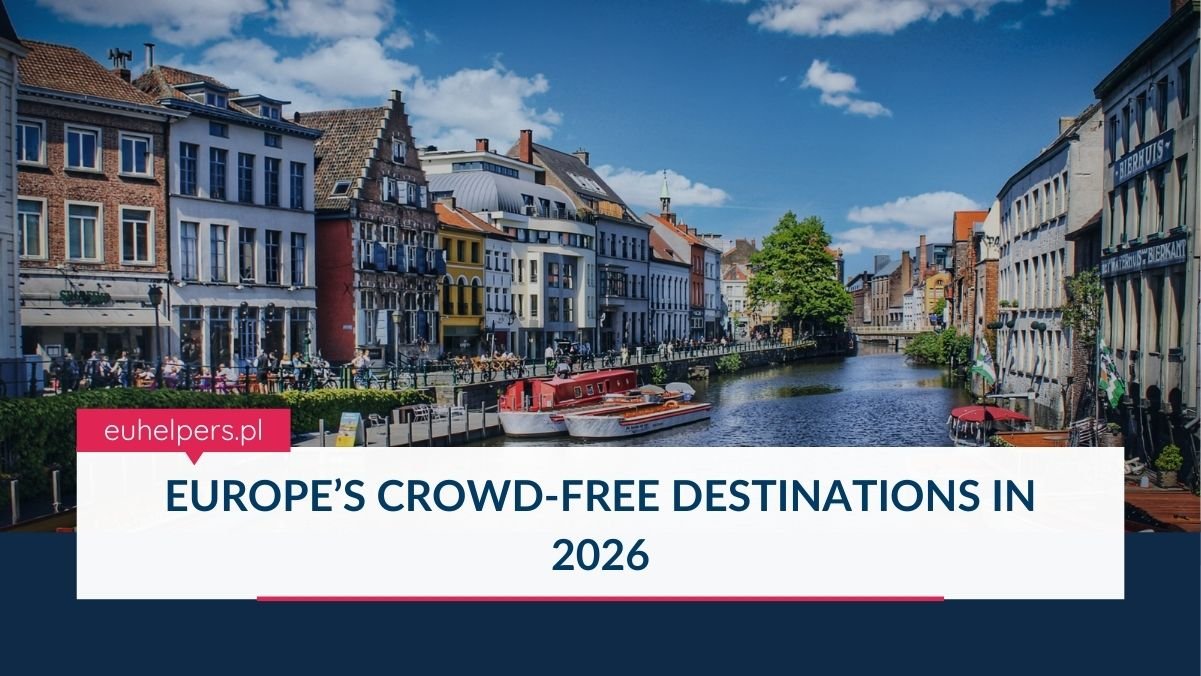
Travel trends in Europe are changing in 2026. More tourists are avoiding crowded cities like Paris, Rome, and Barcelona and choosing quieter destinations instead. This shift is supported by data, traveler preferences, and rising interest in second-tier cities that offer better comfort, lower prices, and authentic experiences.
According to the travel platforms:
-
21% of travelers plan to visit lesser-known destinations
-
51% choose them because of lower travel costs
-
44% prefer fewer tourists and less crowding
-
40% want unique culture and authentic experiences
-
Bookings to second-tier cities have increased by 34%
This trend shows a clear shift toward peaceful, affordable, and meaningful travel experiences.
Lower Prices Make Travel More Affordable
One of the biggest reasons tourists choose less crowded destinations is cost savings. Popular cities often have higher prices for hotels, food, and attractions due to high demand.
In quieter destinations, travelers can benefit from:
-
Lower hotel and accommodation costs
-
Affordable local restaurants
-
Cheaper public transportation
-
Fewer tourist surcharges
Cities like Murcia, Krakow, and Faro offer excellent infrastructure at significantly lower prices compared to major tourist centers.
Fewer Crowds Provide a More Comfortable Experience
Crowded destinations often mean long queues, packed streets, and limited availability. Many travelers now prefer peaceful environments where they can explore comfortably.
Benefits of less crowded destinations include:
-
No long waiting lines at attractions
-
Easier access to museums and landmarks
-
Less stress during sightseeing
-
Better overall travel experience
This allows tourists to enjoy their trip at a relaxed pace.
Travelers Want Authentic Culture and Local Experiences
Modern travelers are increasingly interested in authentic cultural experiences rather than mass tourism. Smaller cities provide a more genuine connection to local life.
Tourists can experience:
-
Traditional local cuisine
-
Historic neighborhoods without heavy tourism
-
Cultural festivals and local events
-
Friendly interaction with local residents
Cities like Segovia and Ghent offer rich history and culture without overcrowding.
Better Travel Logistics and Easy Accessibility
Many second-tier European cities are well connected by trains and airports. Tourists can easily access these destinations and use them as bases for exploring nearby regions.
Advantages include:
-
Direct train connections to major cities
-
Easy airport access
-
Compact city centers
-
Convenient day trips to nearby attractions
For example, Bari allows easy travel across southern Italy, and Antwerp connects quickly to Brussels, Paris, and Amsterdam.
Balanced Tourism Growth and Improved Infrastructure
As tourism spreads beyond traditional hotspots, smaller cities have improved their infrastructure to accommodate visitors.
Travelers can now enjoy:
-
Quality hotels and accommodations
-
Efficient public transportation
-
Modern tourist facilities
-
Better safety and services
This makes alternative destinations more attractive and practical.
Top Crowd-Free Destinations in Europe in 2026
Several European cities have seen major growth in interest due to their peaceful atmosphere and affordability.
Segovia, Spain (+96%)
A UNESCO World Heritage city near Madrid known for its Roman aqueduct, Gothic cathedral, and historic castle.
Murcia, Spain (+86%)
Affordable city with warm weather, beaches nearby, and fewer tourists.
Bari, Italy (+85%)
Ideal base for exploring southern Italy, with lower costs and fewer crowds than Rome or Florence.
Antwerp, Belgium (+69%)
Historic city with excellent train connections and fewer tourists than Brussels or Bruges.
Ghent, Belgium (+66%)
Beautiful canals, medieval architecture, and student-friendly prices.
Málaga, Spain (+63%)
Combines beaches, culture, and easy travel access with lower tourist pressure outside peak season.
Faro, Portugal (+51%)
Quiet gateway to the Algarve region with beautiful natural parks and beaches.
Krakow, Poland (+51%)
Historic city with affordable prices and rich cultural heritage.
Bruges, Belgium (+49%)
Charming canal city best explored during off-peak times.
Rotterdam, Netherlands (+49%)
Modern city offering a quieter alternative to Amsterdam.
Peaceful Travel Offers Better Value and Quality
Choosing less crowded destinations allows travelers to enjoy:
-
Better value for money
-
Relaxed sightseeing
-
Authentic cultural experiences
-
Easier accommodation availability
-
Improved overall travel satisfaction
This trend is expected to continue as travelers prioritize comfort and meaningful experiences over crowded tourist hotspots.
Conclusion
In 2026, more tourists are choosing quieter destinations across Europe because they offer lower costs, fewer crowds, authentic culture, and easier travel experiences. With improved infrastructure and accessibility, second-tier cities provide excellent alternatives to traditional tourist centers.
These destinations allow travelers to explore Europe comfortably, affordably, and more authentically.