
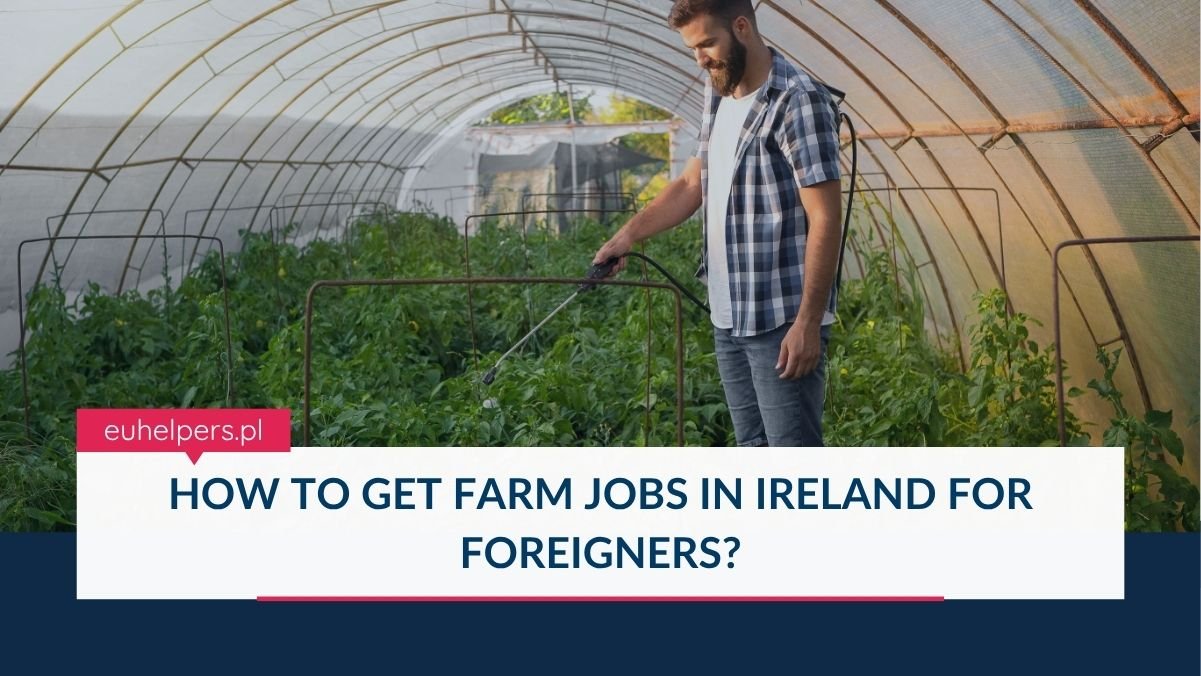
Ireland is one of the most active agricultural employers in all of Europe, and right now the country is actively hiring foreign farm workers in record numbers. Farm jobs in Ireland for foreigners have grown significantly in 2025 as the Irish agricultural sector faces a persistent shortage of local labour. From fruit picking on the rolling hills of Wexford to dairy farming in County Cork, employers across Ireland are opening their doors to workers from outside the European Union who are ready to work hard and build a better life.
Ireland's green landscape is not just beautiful — it is productive. The country produces enormous volumes of dairy, beef, mushrooms, soft fruits, vegetables, and cereals every year, and the farms and food production units behind this output need consistent, reliable workers. With low unemployment among Irish nationals and a limited domestic workforce in rural areas, Irish farmers have turned to international hiring to keep operations running. This means that if you are a dedicated worker from the Philippines, India, Pakistan, Bangladesh, Nepal, South Africa, Brazil, or any other non-EU country, your chances of getting a legitimate farm job in Ireland in 2026 are very real.
This guide covers everything you need to know — salary expectations, visa types, required documents, job responsibilities, accommodation, and how to apply through EU Helpers, one of Europe's most trusted recruitment platforms for foreign workers.
Why Ireland Needs Foreign Farm Workers Right Now
Ireland's agriculture sector is one of the cornerstones of its national economy. The country exports billions of euros worth of food and drink every year, with dairy alone accounting for a huge portion of export revenue. To maintain this output, Irish farms depend heavily on a consistent workforce — but finding enough workers locally has become increasingly difficult.
Irish nationals have largely moved into urban employment, service industries, and technology sectors. Rural areas face serious depopulation, which means farms in counties like Tipperary, Kilkenny, Waterford, Wexford, Kerry, and Donegal struggle to fill even entry-level positions. The situation has been worsening since 2020, and by 2025, the government and private employers have accelerated international hiring to fill the gap.
On top of the demographic problem, seasonal demand spikes further strain resources. During harvest season — typically running from late spring through autumn — the need for workers doubles or even triples on some farms. Soft fruit farms, mushroom farms, and vegetable growing operations are especially reliant on temporary and seasonal workers. Ireland has responded by expanding its work permit system to make it easier for non-EEA nationals to come and work legally in agriculture.
The result is a genuine opportunity for foreign workers. Not just a job, but a structured, legal pathway to earning a good income in a safe country while potentially building long-term residence.
Key Job Highlights at a Glance
| Feature | Details |
|---|---|
| Job Title | Farm Worker / Agricultural Labourer / Seasonal Farm Operative |
| Monthly Salary | €1,950 – €2,800 (gross, depending on role and employer) |
| Contract Duration | 6 months (seasonal) to 12 months (full-time) with renewal option |
| Working Hours | 39–48 hours per week |
| Overtime | Available and paid at 1.5x standard rate |
| Accommodation | Provided by many employers (deducted at regulated rate) |
| Transportation | Some employers provide shared transport to/from work sites |
| Meals | Not typically included, but kitchen facilities provided |
| Health Insurance | Employer-linked or access to public health via PRSI contributions |
| Paid Annual Leave | Minimum 4 weeks per year as per Irish employment law |
| Visa Type | Employment Permit (General Employment Permit for most roles) |
| Permit Processing Time | 4–12 weeks from application date |
| Industries Hiring | Dairy, beef, horticulture, mushrooms, soft fruits, vegetables, cereals |
What Farm Workers Actually Do – Daily Responsibilities
Farm work in Ireland covers a wide range of tasks depending on the type of farm. Whether you are placed at a mushroom growing facility, a dairy operation, or a vegetable and fruit farm, here is a realistic picture of what your daily work will involve.
On mushroom and vegetable farms, which are among the biggest employers of foreign workers, workers are typically responsible for picking mature crops by hand at regular intervals throughout the day. The work is repetitive but requires attention to quality — supervisors expect workers to distinguish between produce that is ready for market and produce that needs more time. Sorting, packaging, and labelling products after picking is also a core part of the job, as farms often supply directly to major Irish and UK supermarket chains. Maintaining hygiene standards in food production environments is mandatory, and workers receive training on this from day one.
On dairy farms, the daily routine is structured around the milking schedule. Most dairy farms in Ireland operate twice-daily milking, meaning early mornings — often starting at 5 or 6 AM — are the norm. Workers assist with attaching milking equipment to cows, monitoring animals for health issues, cleaning milking parlours and equipment after each milking session, and feeding animals according to set schedules. Calving season adds an extra layer of responsibility, and workers may be asked to assist with newborn calves and their care.
On beef and mixed livestock farms, duties include feeding animals, maintaining fencing and pasture, cleaning barns and sheds, loading and unloading stock, assisting with veterinary visits, and operating basic machinery such as tractors and loaders under supervision. Safety is a key priority on these farms, and all new workers receive induction training before operating any equipment.
On cereal and crop farms, especially during planting and harvest seasons, workers help with soil preparation, planting, spraying under supervisor instruction, crop monitoring, machinery operation (with training), and post-harvest storage duties.
Across all farm types, general maintenance tasks such as cleaning equipment, repairing fencing, tidying farmyards, and maintaining records may also be part of the job. Workers who show initiative, reliability, and willingness to learn often advance to supervisory positions within one to two seasons.
Salary and Earnings – What You Can Realistically Expect
One of the most important questions for any foreign worker considering Ireland is how much money they can earn. The good news is that Ireland has a strong minimum wage policy and active enforcement of employment law, which means foreign workers are legally protected from underpayment.
As of 2025, Ireland's national minimum wage is €13.50 per hour. However, most farm employers pay above this rate to attract and retain reliable workers. Entry-level farm operatives typically earn between €13.50 and €15.00 per hour, while workers with experience in specialist areas such as dairy or machinery operation can earn €15.00 to €17.00 per hour or more.
Based on a standard 39-hour working week, a basic farm worker in Ireland can expect to take home approximately €1,950 to €2,400 per month gross before taxes and social insurance (PRSI) deductions. With overtime — which is widely available during peak seasons — monthly earnings can rise to €2,500 to €2,800 or beyond.
It is worth noting that tax in Ireland operates under the PAYE (Pay As You Earn) system. As a new worker, you will receive a temporary tax credit until your full tax registration is processed by Revenue Ireland. Once correctly registered, most farm workers in low-to-moderate earnings brackets have a relatively low effective tax rate, especially in their first year.
Accommodation deductions, where employers provide housing, are regulated by Irish law and cannot exceed a set maximum. This ensures that even after accommodation costs, workers are left with a fair take-home income. Many workers with accommodation provided save substantially compared to workers renting privately in Irish cities.
Benefits and Perks Beyond the Basic Salary
Employers in Ireland who hire foreign workers through proper legal channels typically offer a package of benefits beyond the base hourly rate. Understanding the full package helps you evaluate different job offers accurately.
Most farm employers who recruit from outside the EU assist with the work permit application process and cover the employer's portion of the permit fee. This is a significant benefit as it removes a major financial barrier from the start. Many also provide or arrange accommodation on or near the farm, which dramatically reduces your cost of living during the contract period.
Irish employment law entitles all workers — including foreign nationals on work permits — to a minimum of four weeks paid annual leave per year. Public holidays are also paid. This gives farm workers in Ireland genuine rest time without losing income, which is not always the case in every country.
Overtime is common on Irish farms, especially during harvest or calving seasons, and is paid at a premium rate — typically 1.5 times the standard hourly rate. Some employers also pay a Sunday premium, which adds further to weekly earnings if your roster includes weekend work.
Workers employed in Ireland contribute to the social insurance system (PRSI), which gives access to a range of state benefits including sick pay entitlements, maternity/paternity leave, and potentially a pension contribution record. If you remain working in Ireland for an extended period, your PRSI record builds into valuable long-term entitlements.
Many farm employers also provide access to shared transport to work sites, protective clothing such as waterproof jackets and boots, and on-the-job training in equipment use and safety procedures. Some larger employers include a small end-of-season bonus for workers who complete their full contract.
Who Can Apply – Requirements and Qualifications
Farm jobs in Ireland for foreigners are generally accessible even without formal educational qualifications. What matters most to Irish farm employers is physical fitness, reliability, willingness to work outdoors in all weather conditions, and a basic understanding of farm safety principles. However, there are still some requirements you should be aware of before applying.
The most fundamental requirement is that you are legally eligible to work in Ireland, which for non-EEA nationals means having a valid General Employment Permit issued by the Irish Department of Enterprise, Trade and Employment. Your employer in Ireland must be registered with Revenue and must apply for your permit before you travel.
In terms of physical requirements, farm work demands a reasonable level of physical fitness as roles involve prolonged periods of standing, bending, lifting, and outdoor work regardless of weather. Employers will expect you to confirm your fitness for this type of work, and some may request a basic medical certificate.
Previous experience in any form of agriculture, farming, food production, or outdoor manual work is a strong advantage and will improve your application. Even experience from your home country — whether growing crops, caring for livestock, working on a plantation, or operating basic machinery — is relevant and worth mentioning.
English language ability is helpful but not always mandatory for entry-level positions. Many farms operate with multilingual teams and use visual training materials, but a basic level of spoken English — enough to understand safety instructions and communicate with supervisors — is expected. Improving your English before arrival will significantly help your daily experience on the job.
A driver's licence is not typically required for most farm labourer roles, but having one — especially a category B or C licence for agricultural vehicles — will increase your options and earning potential, as machinery operators are paid at a higher rate.
For more senior or specialised positions such as herd management, machine operator, or farm supervisor, employers may require a relevant agricultural qualification, a minimum of two to three years of documented experience, or specific certifications such as a Safe Pass card (an Irish construction and agriculture safety qualification that can be obtained after arrival).
Documents You Need to Apply and Travel
Preparing your documents correctly is critical to a smooth application and visa process. Missing or incorrect documentation is one of the most common reasons for delays or refusals, so it is important to gather everything before your application is submitted.
- Your passport must be valid for at least 12 months beyond your intended date of entry into Ireland and must have at least two blank pages for immigration stamps. If your passport is due to expire within 18 months, renew it before starting the job application process.
- You will need original or officially certified copies of your educational certificates. Even if the job does not require a specific qualification, showing your highest completed level of education supports your overall application and demonstrates reliability to the employer and permit authority.
- An employment reference letter or experience certificate from at least one previous employer is strongly recommended. This should include your job title, dates of employment, a brief description of your duties, and a contact number or email for the employer. If you have agricultural or outdoor work experience specifically, this letter carries even more weight.
- A recent police clearance certificate from your home country — and from any country where you have lived for more than six months in the past five years — is required as part of the work permit application. This certificate must typically be obtained within six months of your application date to remain valid.
- A medical fitness certificate confirming that you are in good general health and free from infectious diseases may be requested, particularly if your home country is flagged for specific health requirements under Irish immigration policy. Your employer or a registered immigration consultant can advise on whether this is needed for your specific case.
- Passport-size photographs to the specifications required by Irish immigration authorities, your birth certificate, and in some cases a marriage certificate (if applicable to your family status declaration) round out the core document set.
- All documents that are not in English must be accompanied by a certified English translation provided by an accredited translator. Original documents should always be kept safe — submit certified copies unless originals are specifically requested.
Work Permit and Visa Process – Step by Step
Understanding exactly how the Irish work permit system operates will help you avoid confusion and prepare for a smooth legal entry. Ireland operates independently from the Schengen Area, which means it has its own visa and immigration framework even as an EU member state.
For most non-EEA nationals seeking farm work in Ireland, the correct permit type in 2025 is the General Employment Permit. This permit covers a wide range of jobs in shortage occupations, and agricultural and farm work roles qualify under Ireland's critical skills and labour market needs framework. Some higher-skilled agricultural roles may qualify under the Critical Skills Employment Permit, which comes with additional long-term residency benefits.
The process begins with a job offer. You cannot apply for an Irish work permit as an individual — it must be applied for by your Irish employer on your behalf. This means the first step is securing a formal job offer from a registered Irish employer. This is where using a trusted recruitment agency like EU Helpers becomes essential, as they connect you directly with registered, compliant employers who are actively hiring.
Once you have a signed job offer or contract, your employer submits the work permit application to the Employment Permits Unit of the Department of Enterprise, Trade and Employment (DETE). Processing times in 2025 are approximately four to twelve weeks depending on the type of permit and current application volumes. Straightforward General Employment Permit applications for shortage occupations such as agricultural work tend to be processed faster.
After the work permit is approved, you will apply for an Irish employment visa (if your nationality requires one) at the Irish Embassy or Consulate in your home country. You submit the visa application along with your work permit approval letter, passport, photographs, and supporting documents. Visa processing times vary by location but typically range from two to eight weeks.
On arrival in Ireland, you will present your permit approval and visa at immigration control, where you will receive an entry stamp. Within ninety days of arrival, you must register with the Garda National Immigration Bureau (GNIB) in Ireland to obtain your Irish Residence Permit (IRP) card. This card is your official proof of legal residence and right to work in Ireland.
The General Employment Permit is initially issued for a maximum of two years. It can be renewed before expiry for a further three years. After five years of legal employment in Ireland — including two years on a General Employment Permit — workers become eligible to apply for a Stamp 4 permission, which removes the requirement for a work permit entirely and allows the holder to work freely in any role in Ireland. After five years of legal residence, you may also be eligible to apply for Irish citizenship by naturalisation, one of the most valuable long-term benefits of building your working life in Ireland.
Living and Working in Ireland as a Foreign Worker
Ireland consistently ranks as one of the safest, friendliest, and most welcoming countries in Europe for foreign workers. The Irish work culture values fairness, humour, and a strong sense of community, and foreign workers who approach their roles with genuine commitment and a positive attitude are consistently welcomed and supported.
The cost of living in Ireland varies significantly by location. Working on a farm in rural counties such as Tipperary, Kilkenny, Cork, or Waterford means your daily living costs are considerably lower than in Dublin or other major cities. With accommodation provided by the employer, your main recurring expenses are food, personal items, and communication costs. Many farm workers find they can save a substantial portion of their income each month under these conditions.
Ireland has an excellent public healthcare system, and workers who contribute PRSI are entitled to access a range of state health services. Emergency care is available to all residents regardless of status. Private health insurance is available for additional peace of mind.
Transport in rural Ireland can be limited, so many farm employers arrange shared transport to and from work or provide on-site or very nearby accommodation to remove commuting as an issue entirely. Learning to cycle or eventually obtaining an Irish driving licence significantly expands your independence.
Irish society is genuinely diverse, and you will find communities from many countries established in most Irish towns and cities. There are strong Filipino, Indian, Polish, Romanian, and Brazilian communities across the country, making it easier to settle in, find familiar food, and connect with people who understand your experience as a newcomer.
Safety for workers in Ireland is enforced by law. The Health and Safety Authority (HSA) actively regulates farm safety in Ireland, and all employers are legally required to provide safety training, appropriate protective equipment, and safe working conditions. Workers have real legal rights and access to the Workplace Relations Commission (WRC) if they ever face unfair treatment.
Why Choose EU Helpers to Find Your Farm Job in Ireland
EU Helpers is a professional and fully registered European recruitment platform dedicated to connecting foreign workers with legitimate, verified employers across Europe, including Ireland. Unlike informal job boards or unverified agencies that can expose workers to scams and exploitation, EU Helpers operates with full transparency — every employer listed on the platform has been verified, and every job posting meets the legal employment standards of the host country.
The team at EU Helpers understands the entire process from the candidate's perspective. They know what Irish employers are looking for, what documents you will need, how the permit system works, and what questions you will have. Whether you are applying from the Philippines, India, South Africa, Brazil, or any other country, EU Helpers provides guidance tailored to your nationality and situation.
Using EU Helpers means you avoid the many pitfalls that catch unaware applicants — fake job offers, fraudulent agencies, unlicensed employers, and immigration violations. You apply through a secure, professional platform and are connected directly with real employers who have real jobs available right now.
You can explore all currently available farm jobs in Ireland and across Europe by visiting https://euhelpers.com/jobs-in-europe. Take the first step today and register your profile so that matching employers can find you.
How to Apply for Farm Jobs in Ireland Through EU Helpers
Applying for a farm job in Ireland through EU Helpers is a simple and straightforward process. Start by visiting https://euhelpers.com/jobs-in-europe and using the search feature to filter for agricultural or farm jobs in Ireland. Review available listings carefully and select roles that match your skills and experience level.
Create a complete candidate profile on the platform. A strong profile includes a clear, professional photo, a detailed description of your work experience, your educational background, any certifications or licences you hold, your language abilities, and your availability for work. The more complete and honest your profile, the better your chances of being matched with the right employer quickly.
Once you identify a job listing that suits you, submit your application directly through the platform. EU Helpers may also connect you with a recruitment consultant who can advise you on your application, help you prepare for employer interviews, and guide you through the documentation and permit process.
Prepare your documents in advance — passport, experience letters, education certificates, police clearance, and photographs — so that once an employer expresses interest, you are ready to move quickly. Employers in Ireland often need to fill positions within a relatively short timeframe, and being prepared gives you a significant advantage over other candidates who are still gathering documents.
After a successful application and employer match, your Irish employer will initiate the work permit process. From that point, EU Helpers can continue to support you with guidance on what to expect at each stage of the visa and immigration process, how to prepare for your arrival in Ireland, and what your rights and responsibilities are once you start work.
Why Ireland Is One of the Best Countries in Europe for Foreign Farm Workers
There are many countries across Europe where farm work is available, but Ireland stands apart for several important reasons that make it especially attractive for foreign workers building long-term careers.
Ireland offers one of the clearest pathways from work permit status to permanent residency and eventually citizenship in the European Union. After five years of legal work, the Stamp 4 permission gives workers full freedom of employment without any permit restrictions. After five years of residence, citizenship by naturalisation becomes available — and Irish citizenship is one of the most valued in the world, providing the right to live and work across all 27 EU member states.
The country's employment laws are comprehensive, actively enforced, and genuinely protect workers. Ireland has a functioning, accessible labour dispute system through the Workplace Relations Commission, and foreign workers have exactly the same legal protections as Irish nationals. Underpayment, unsafe working conditions, and unfair dismissal are all legal violations that can be challenged.
Ireland's English-speaking environment is a huge advantage for workers from countries where English is taught in schools, as it removes the language barrier that makes integration in countries like Germany, the Netherlands, or France more challenging. Even workers with limited English find that daily immersion in an English-speaking workplace accelerates their language learning rapidly.
The Irish climate, while famously wet, is mild year-round with no extreme heat or cold. Farm work outdoors in Ireland is physically manageable throughout the year, unlike some other countries where summer heat or winter freezes create dangerous working conditions.
Finally, Ireland's quality of life — clean air, beautiful countryside, low crime rates in rural areas, and a culture of warmth and hospitality — makes daily life genuinely pleasant. Workers who commit to their time in Ireland consistently report feeling safe, welcomed, and able to save meaningful amounts of money during their employment period.
FAQs
1. Can a foreigner get a farm job in Ireland without prior agricultural experience?
Yes, many entry-level farm worker positions in Ireland do not require prior agricultural experience, especially on mushroom farms, fruit picking operations, and vegetable growing facilities. Employers are often willing to train motivated workers from scratch. What matters more is physical fitness, reliability, a positive attitude, and willingness to work outdoors in varying weather conditions. Mentioning any outdoor, manual, or food production experience from your home country — even informal — will strengthen your application considerably. EU Helpers lists positions across experience levels and can help match you with the right employer for your background.
2. What is the minimum salary for farm workers in Ireland in 2025?
\Ireland's national minimum wage as of 2025 is €13.50 per hour, and all workers — including those on work permits — are legally entitled to this rate or above. In practice, many farm employers pay between €13.50 and €16.00 per hour depending on the role. A full-time farm worker on a 39-hour week can expect gross monthly earnings of approximately €1,950 to €2,500, rising significantly with overtime. Ireland has a strong system of wage enforcement, so underpayment is a legal violation that workers can report to the Workplace Relations Commission.
3. How long does it take to get an Irish work permit for farm work?
The General Employment Permit, which is the most common permit type for non-EEA farm workers, currently takes approximately four to twelve weeks to process once the employer submits the full application. Processing times depend on application volumes at the Employment Permits Unit and the completeness of the documents submitted. After the permit is approved, the Irish employment visa application at your local embassy takes an additional two to eight weeks. Starting the process early and having all documents fully prepared from the beginning helps minimise delays significantly.
4. Does the employer pay for the Irish work permit or does the worker pay?
Under Irish employment permit law, the employer is legally required to pay the employer's share of the work permit application fee, and it is illegal for employers to deduct this cost from a worker's wages. The current fee for a General Employment Permit is split between the employer and may involve a contribution from the worker for certain categories, but any such deduction must be agreed upon in writing before employment begins. Reputable employers working through agencies like EU Helpers follow these rules strictly. If any employer asks you to pay all costs upfront without a formal contract, treat this as a red flag.
5. Is accommodation provided with farm jobs in Ireland for foreigners?
Many Irish farm employers, especially those in rural areas, provide accommodation for foreign workers either on the farm or in nearby housing. This accommodation is provided at a regulated cost that the employer deducts from wages — there is a legal maximum rate set by Irish law to prevent exploitation. Not every employer provides accommodation, so it is important to confirm this when reviewing job offers. EU Helpers clearly indicates in job listings whether accommodation is included, helping you plan your living arrangements and budget accurately before you travel.
6. What type of visa do I need to work on a farm in Ireland?
Non-EEA nationals need two things: an Employment Permit (applied for by their Irish employer through the Department of Enterprise, Trade and Employment) and, if their nationality requires it, an Irish Employment Visa issued by an Irish embassy or consulate. Citizens of some countries do not require a visa to enter Ireland but do still need a valid work permit. Once you arrive in Ireland with your permit and visa, you must register with the Garda National Immigration Bureau (GNIB) within 90 days to receive your Irish Residence Permit (IRP) card, which is your official proof of legal residence and work authorisation.
7. Can I bring my family to Ireland on a farm work permit?
Once you hold a valid General Employment Permit and have been working in Ireland for at least twelve months, you may be eligible to apply for family reunification, allowing a spouse or civil partner and dependent children to join you in Ireland. Family members who join under reunification are permitted to work in Ireland without needing their own separate work permit. The conditions for family reunification include demonstrating sufficient income to support dependants and having suitable accommodation. EU Helpers can provide guidance on this process once you have secured your initial employment.
8. Will I be able to renew my farm work permit in Ireland after the first contract?
Yes. The General Employment Permit is typically issued for an initial period of up to two years and can be renewed for a further three years before expiry. After completing five years of legal employment in Ireland on work permits, you become eligible for a Stamp 4 permission, which removes the work permit requirement entirely and allows you to work in any role without restriction. This pathway to unrestricted work status is one of Ireland's most significant advantages for long-term foreign workers and represents a genuinely valuable career and life opportunity.
9. What are the working hours for farm workers in Ireland?
Standard working hours for farm workers in Ireland are typically 39 to 48 hours per week, depending on the nature of the role and the time of year. During peak seasons such as harvest or calving, hours can increase with overtime, which is paid at a premium rate — usually 1.5 times the normal hourly rate. Irish employment law sets a maximum average working week of 48 hours, averaged over a reference period. Workers are also entitled to rest breaks during shifts, daily rest periods between working days, and weekly rest days. These entitlements apply equally to all workers including those on employment permits.
10. Is English required for farm jobs in Ireland?
A basic level of English is helpful and makes daily life significantly easier, but it is not always a hard requirement for entry-level farm worker positions. Many farms operate with multilingual teams and use visual or demonstration-based training. However, all workers are expected to be able to understand basic safety instructions and communicate with supervisors when needed. A minimum working knowledge of everyday English is strongly recommended before travelling to Ireland. Many workers find that their English improves rapidly through daily immersion once they are working and living in Ireland, which opens further career opportunities over time.
11. What happens if I lose my job in Ireland — will my permit be cancelled?
If you lose your job in Ireland while on a General Employment Permit, your permit does not immediately expire. You have a grace period of up to 90 days to find a new employer who is willing to apply for a new or transferred permit on your behalf. It is important to notify the Employment Permits Unit about your change in employment status during this time. If you are unable to secure new employment within the grace period, you may be required to leave Ireland. EU Helpers strongly advises all workers to maintain open communication with their employer and to seek advice immediately if their employment situation changes.
12. Are there permanent farm jobs available in Ireland for foreigners, or only seasonal ones?
Both types are available. Seasonal and temporary positions — typically six months — are common in soft fruit, vegetable, and mushroom farming, particularly during spring and summer. However, permanent and year-round positions also exist, especially on dairy farms, beef farms, and in food processing and packing facilities associated with agriculture. Permanent positions offer greater stability, a clearer path to long-term residency, and the ability to build PRSI entitlements over a longer period. EU Helpers lists both seasonal and permanent agricultural jobs, clearly indicating the contract duration on each listing.
13. What are the most in-demand farm jobs in Ireland for foreigners in 2025?
The most consistently in-demand agricultural roles for foreign workers in Ireland in 2025 include mushroom farm operatives (Ireland is the largest mushroom producer in Europe and a major exporter), dairy farm assistants, general farm labourers, fruit and vegetable pickers, food packing and processing operatives in agri-food facilities, and livestock farm workers. Roles requiring a tractor licence or forklift certification are particularly well paid. The mushroom sector alone employs thousands of foreign workers across counties Monaghan, Cavan, and Leinster, making it one of the most accessible entry points for new arrivals in the Irish agricultural sector.
14. Do farm workers in Ireland get paid holidays and sick leave?
Yes. Under Irish employment law, all workers — including those on work permits — are entitled to a minimum of four weeks of paid annual leave per year, pro-rated based on the hours worked. Public holidays in Ireland are also paid working days or, if the worker works on a public holiday, compensated with additional pay or a day off in lieu. From 2024 onwards, Ireland introduced statutory sick pay entitlements, meaning farm workers are also entitled to a set number of paid sick days per year covered by their employer. These entitlements are legally enforceable and apply fully to foreign workers.
15. How do I start my application for farm jobs in Ireland through EU Helpers?
The process is straightforward. Visit EU Helpers and browse available agricultural job listings in Ireland. Create a detailed candidate profile with your work history, skills, language abilities, and availability. Apply for roles that match your background and let the EU Helpers team connect you with verified employers. Once an employer expresses interest, EU Helpers guides you through the documentation requirements and permit application process. Having your passport, experience letters, education certificates, police clearance, and photographs ready in advance will speed up the process significantly. Start your application today and take the first real step toward a legal, well-paid farm job in Ireland.
Conclusion – Your Farm Job in Ireland Is Within Reach
Farm jobs in Ireland for foreigners represent one of the most realistic and rewarding opportunities available to international workers in Europe right now. Ireland needs you. The country's farms are actively hiring, the government has created legal pathways specifically to bring in the workers the agricultural sector needs, and the employment conditions — salary, safety, rights, and long-term prospects — are among the best in Europe for foreign agricultural workers.
You will earn a fair and legally protected wage, have access to accommodation, work in a safe and regulated environment, build a PRSI record that contributes to your future security, and set yourself on a path that can lead to unrestricted work rights and eventually Irish citizenship. For workers who approach this opportunity seriously and commit to their contract, the rewards — financial, professional, and personal — are genuine.
Do not wait for this opportunity to pass. The demand for farm workers in Ireland is high right now in 2025, and employers are ready to hire. EU Helpers has already helped thousands of foreign workers find legitimate, well-paying jobs across Europe, and their team of experienced consultants is ready to guide you through every step of the process.
Visit EU Helpers today. Browse real farm job listings in Ireland, create your candidate profile, and submit your application. Your new life in Ireland can start sooner than you think.